Technology
About Careers Contact

HoloWedge™

Superefficient near-eye display,
ready for any consumer-grade eyewear.

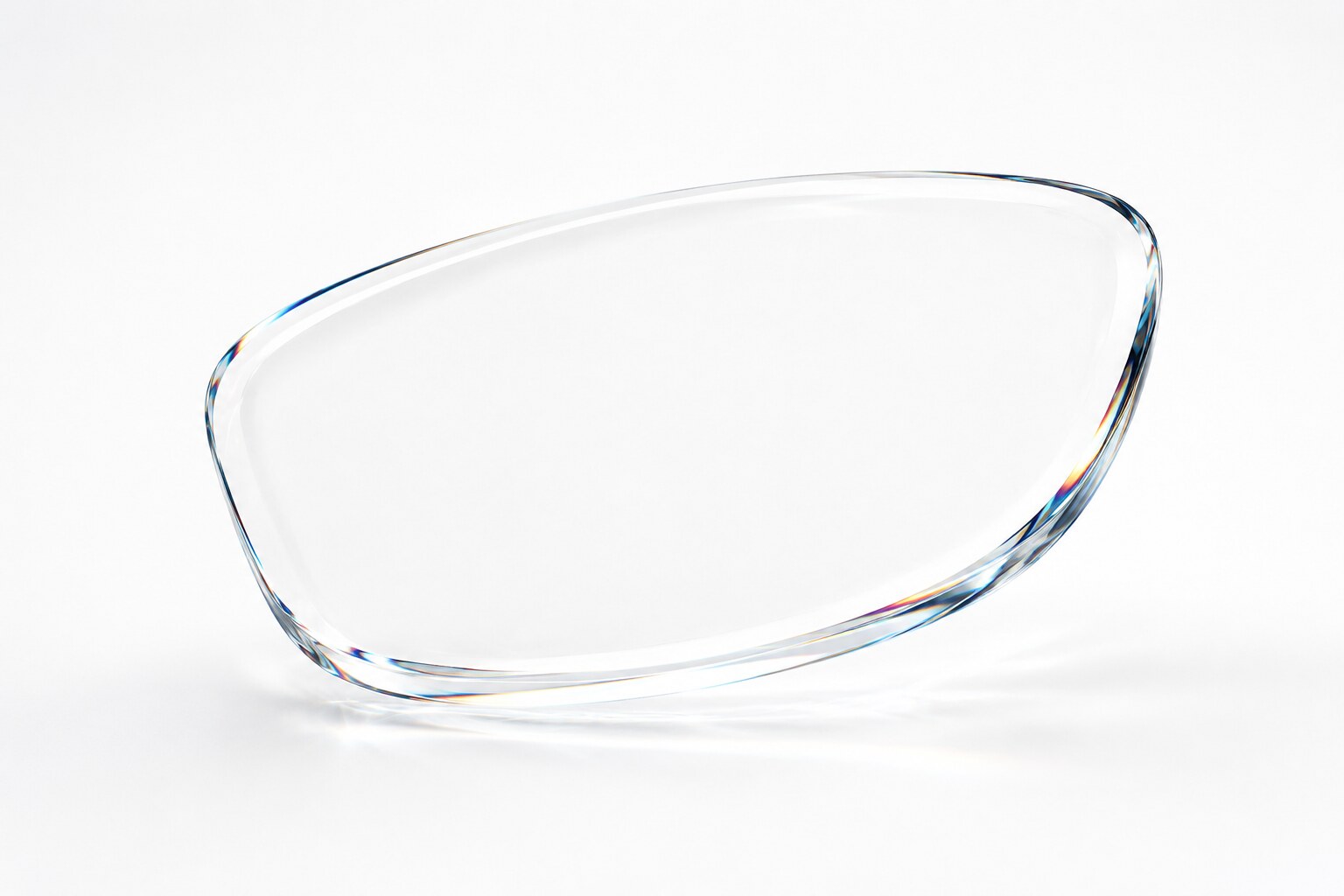
The HoloWedge combiner lens, a clear curved optic with iridescent refraction along its edge

The key components of HoloWedge architecture

Our proprietary VPH design and manufacturing capability is built to scale with 15+ years optics experience, an in-house pilot line, and tier-one manufacturer partnerships.

Cleanroom technician in a bunny suit holding up a HoloWedge VPH film lens for inspection

The volume phase hologram (VPH) film

HoloWedge uses a proprietary holographic display architecture in a thin polymer film embedded in the lens.
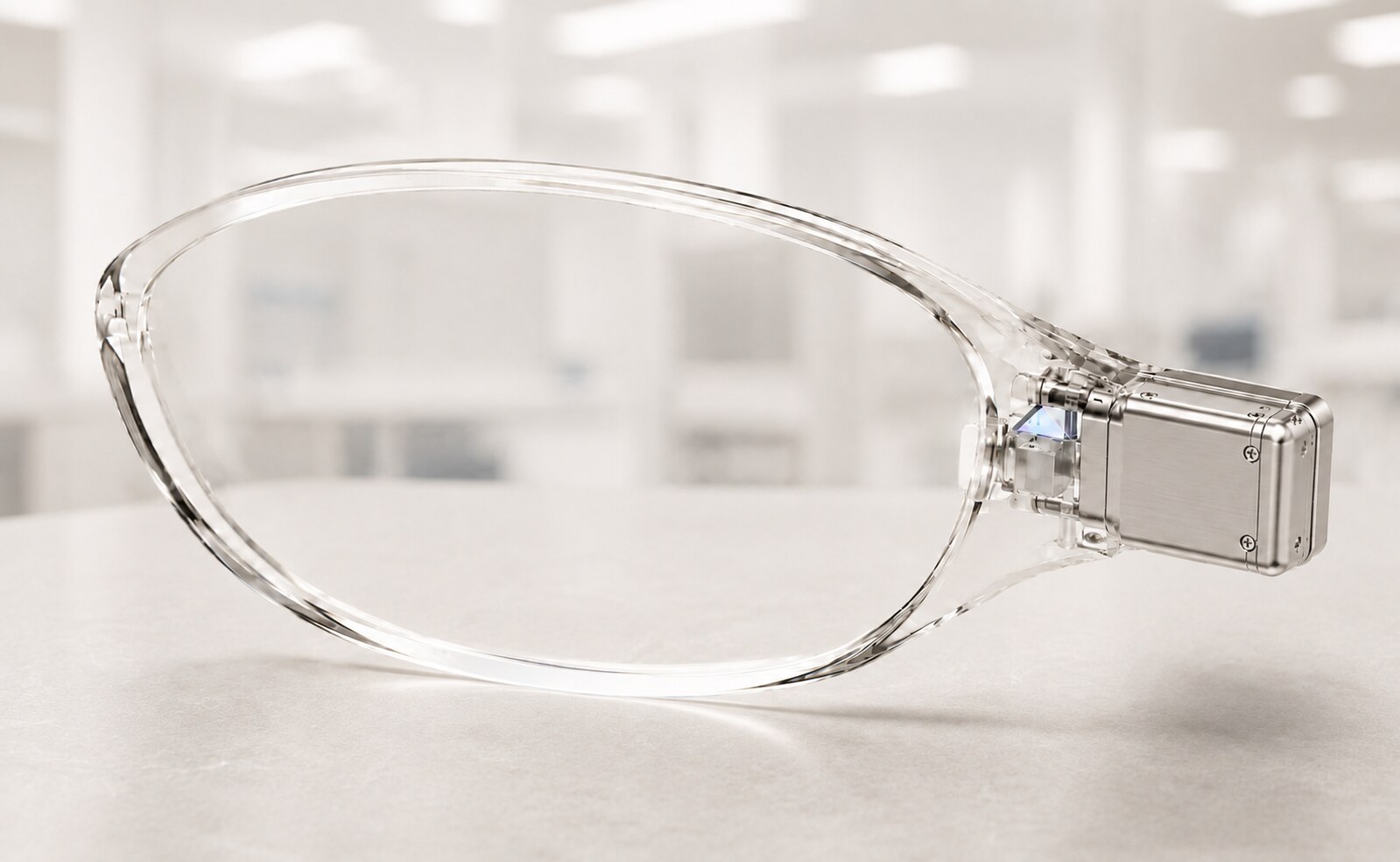
A HoloWedge lens with the microprojector module attached at the temple end, on a lab bench

The combiner architecture

A microprojector couples light into a lightguide, where it is redirected to the VPH and the image is built in front of the user's eye.

HoloWedge makes mass-market AI eyewear possible

Today's waveguides lose most of the display light before it ever reaches the eye. Not for lack of engineering, but because their optical architecture caps what's physically possible. HoloWedge is a new, transformative paradigm.

01

High-performance optical architecture for AI and AR eyewear

The finished HoloWedge architecture is a curved, transparent polymer layer. It's easily embedded in any consumer lens, from lightweight AI eyewear to high-performance immersive AR.


Woman wearing clear HoloWedge eyewear on a city street in daylight
Man wearing clear HoloWedge eyewear in a cafe, indistinguishable from ordinary glasses

02

Undetectable, superefficient always-on display

HoloWedge delivers 50-70% of the light to the eye, compared to 3-8% for typical diffractive waveguides. That efficiency translates directly into what users feel: all-day battery life, a wider field of view, no forward light leak revealing the display to others.

Because so little light needs to be generated to begin with, the projector produces far less heat, removing the need for bulky thermal management and letting the whole module shrink down to fit inside standard consumer-grade lenses.

Technical specifications at a glance

Comprehensive capabilities for next-generation AR systems.

10×
Optical Efficiency
Higher optical efficiency than conventional waveguides
Scalable
Manufacturing
Polymer-based manufacturing designed for high-volume production
Curves & Rx
Frame Integration
Curved- and prescription-lens compatible for seamless frame integration
RGB
Full Color
Support for the complete color gamut via LED or Laser light engines
High
Transparency
High-transmission, crystal-clear see-through quality for natural vision
1%
Forward Light Leakage
Negligible outward light emission for user privacy
Up to 90°
Field of View
Broad viewing angles for immersive, full-field AR experiences
Lightweight
Plastic Components
Built using only plastic components for a lightweight design

Why AlphaLum VPH?

Traditional SRG-based waveguides

  • Low optical efficiency (a few %)
  • Visible forward light leakage ("eye glow")
  • FoV-constrained by material index, forcing reliance on exotic materials for high FoV
  • Compromised see-through quality due to diffraction artifacts
  • Flat waveguides require additional curved optics to meet visual performance standards
  • Reliance on exotic materials introduces complex, cost-intensive manufacturing limiting scalability

AlphaLum VPH

  • 10× higher optical efficiency
  • Extremely low forward light leakage
  • Up to 90° field of view
  • Highly transparent and unobstructed see-through quality
  • Sleek wearable design
  • Scalable polymer-based manufacturing

Request a demo

See our holographic display technology in action and explore how it can power your next product.